Lv. 1 Rudiments
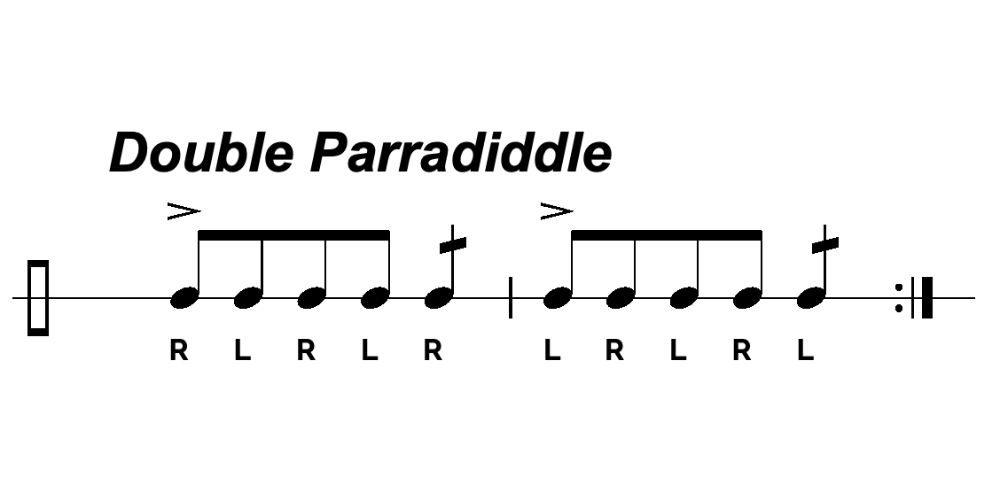
You may see this written differently elsewhere. This is a creative choice to help in the identification of a double stroke.
Notes and Practice tips:
Notes:
Coordination and Hand Independence:
The R L R L R R L R L R L L pattern requires both hands to work together smoothly, enhancing coordination and helping you change the leading hand while playing.
Speed and Precision:
This foundational rudiment helps drummers play cleanly at faster tempos, developing both speed and precision on the practice pad and the drum kit.
Technique and Control:
By incorporating both single and double strokes, double paradiddles help drummers develop control over their hands, ensuring balanced strength and control between both hands.
Versatility in Playing:
You'll find double paradiddle patterns used in real-world drumming applications. One of the clearest examples are 12/8 or 6/8 afro cuban rhythms. An example linked here.
Practice Tips
Start Slow
Use a metronome or choose a slow piece of music to help you stay consistent. Any music 6/8 or 12/8 would work best for this rudiment.
Say “Double Paradiddle” Out Loud
By splitting “double paradiddle” into six syllables (dou-ble-pa-ra-di-dle) you can get a sense of the pattern.
Stick Height
Explore using one hand consistently higher than the other, either R or L. You will produce some interesting rhythms by doing this
Accent on the first note
The eventual aim is to be able to keep your stick height consistent so there are no louder notes in your rhythm. It should ultimately sound smooth with practice.
Stay Consistent
Keep the relative height of your sticks even
Keep the rhythm even and stay in time
Practice regularly to help build your muscles and endurance
Get Used To Repetition
Settle in, and prepare to do the exercise over and over again
Playing along to music can help to provide variation and interest to your practice time. A 3min track also provides a good time marker as to how long you’ve been practicing.
Slowly Increase Your Tempo
When you feel comfortable playing through the rudiment slowly, incrementally increase the tempo then rehearse with this for a while. You’ll find that this will help you more effectively reach higher speeds rather than jumping straight to a speed in which you struggle