Lv. 1 Rudiments
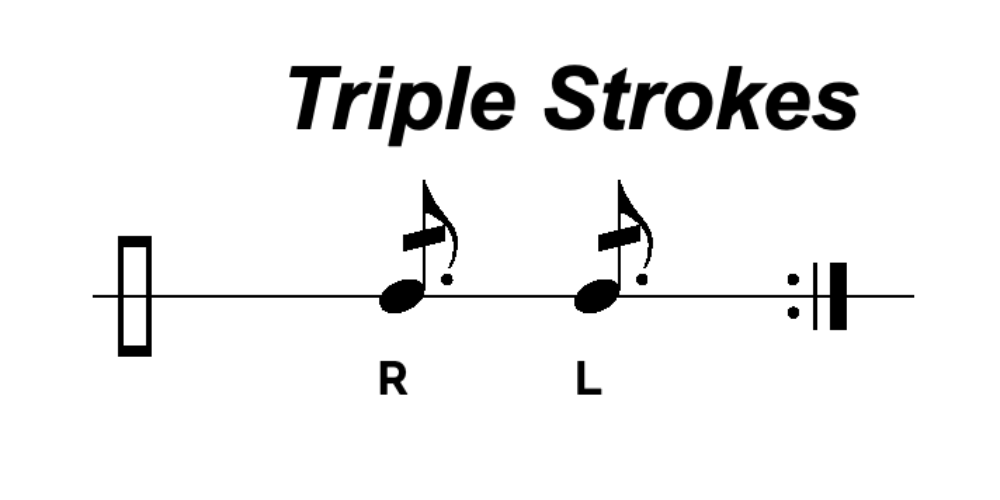
You may see this written differently elsewhere. This is a creative choice to help in the identification of a double/triple stroke.
Notes and Practice tips:
Developing a Different Feel and Sound:
Triplet-Based Rhythms: The triple stroke roll is perfectly suited for music with a triplet feel, such as jazz, Latin, and fusion. It gives a sense of flow and a different rhythmic texture than straight sixteenth-note patterns.
Creating Fluid Fills: When executed cleanly, the triple stroke roll can be used to create smooth, flowing fills that move effortlessly around the drum kit. The three-note grouping provides a different rhythmic framework than the two-note grouping of a double stroke roll.
2. Enhancing Advanced Technique:
Rebound and Finger Control: Playing three consecutive notes with one hand requires a high degree of control over both rebound and finger technique. Unlike the double stroke, where the second note is primarily a rebound, the triple stroke often requires the drummer to actively "squeeze" or use their fingers to get a consistent third note. This trains your hands to be more sensitive and responsive, especially at higher tempos.
"Free Stroke" and Moeller Technique: Many drummers use a variation of the Moeller technique or a "free stroke" to execute the triple stroke roll efficiently. This involves a single, larger arm or wrist motion to initiate the first stroke, with the subsequent strokes being controlled by finger and wrist movements. Mastering this technique is crucial for playing fast and without tension.
3. Expanding Rudimental Vocabulary:
Building Blocks for Other Rudiments: Just as the double stroke is part of the paradiddle, the triple stroke roll is a building block for other, more complex rudiments. Practicing it helps with a variety of patterns and allows a drummer to improvise and create their own fills based on triplet groupings.
4. Improving Hand Independence and Control:
Balancing Both Hands: As with all rudiments, practicing the triple stroke roll equally with both your dominant and non-dominant hands is crucial. This ensures that you have a consistent and balanced sound, regardless of which hand is leading. It also helps to strengthen your weaker hand and improve overall coordination.
Practice Tips
Start Slow
Use a metronome or choose a slow piece of music to help you stay consistent.
Experiment With Where You Hit The Skin (Batter Head)
Playing towards the rim is more bouncy
Playing in the middle of the batter head is less bouncy.
Stay Consistent
Keep the hight of your sticks even
Keep the rhythm even and stay in time
Practice regularly to help build your muscles and endurance
Get Used To Repetition
Settle in, and prepare to do the exercise over and over again
Playing along to music can help to provide variation and interest to your practice time. A 3min track also provides a good time marker as to how long you’ve been practicing.
Slowly Increase Your Tempo
When you feel comfortable playing through the rudiment slowly, incrementally increase the tempo then rehearse with this for a while. You’ll find that this will help you more effectively reach higher speeds rather than jumping straight to a speed in which you struggle